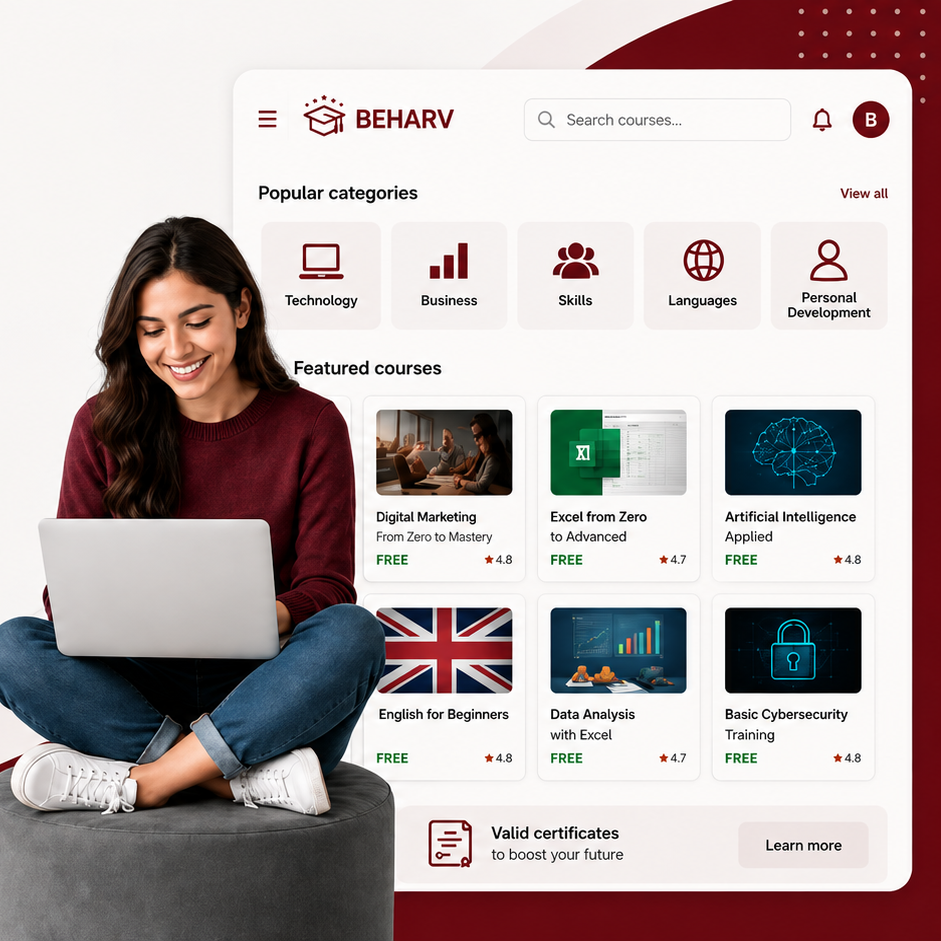
Mastering English doesn't have to be a lengthy or complicated process. With the help of mobile apps, it's possible to learn the language quickly and at your own pace.
Whether it's to improve pronunciation, expand vocabulary, or practice conversation, these tools offer interactive and accessible methods to accelerate learning.
By incorporating English learning into your routine, even for just a few minutes, you can transform your smartphone into a powerful ally in achieving fluency.
How do apps for speaking English quickly on your cell phone work?
The apps utilize modern and intuitive methodologies, combining short lessons with interactive activities to facilitate learning. The lessons are generally designed to teach a specific aspect of the language, such as vocabulary, grammar, or useful phrases, and can be completed in just a few minutes.
Many apps employ artificial intelligence to offer personalized feedback. Speech recognition, for example, is a common technology that assesses your pronunciation and provides immediate corrections. This not only helps identify errors but also encourages continuous improvement in speech and intonation.
Interaction with the content is also a central feature. Instead of just watching or listening, users are encouraged to participate actively, answering questions, practicing dialogues, and completing challenges. This approach keeps learning dynamic and reduces monotony.
Furthermore, personalization is a major differentiator. Many apps adjust the content based on the user's progress, ensuring that lessons are always challenging but not demotivating. This creates a unique study plan tailored to your needs and goals.
What do apps for speaking English quickly on your cell phone offer?
The apps offer a complete and flexible learning environment. They combine different resources, such as explanatory videos, practical exercises, and dialogue simulations, to cover all essential areas of the language. This way, you can learn to read, listen, speak, and write in English in a balanced way.
Conversational practice is one of the biggest draws. Many apps create real-life scenarios, such as shopping, ordering food, or participating in a job interview, so users can practice the language in practical contexts. These activities help develop confidence and fluency quickly.
Another important point is gamification. By transforming learning into a game, apps make the process more motivating and engaging. You earn points, unlock achievements, and compete with other users, which encourages consistency and improves performance.
Finally, many apps offer access to a global community. This includes the possibility of conversing with native speakers or other students, providing a cultural immersion that is essential for mastering the language quickly and effectively.
Benefits of learning English on your mobile phone: